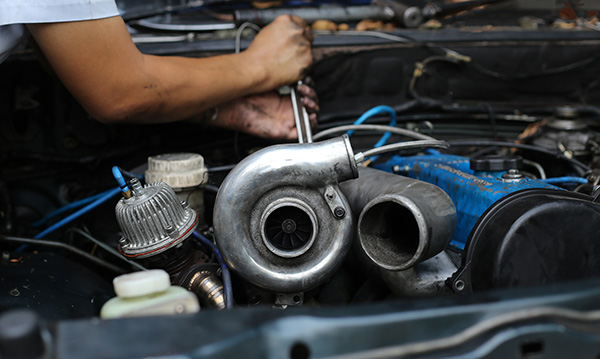
Oil loss is easier to understand when there is a spot on the driveway. You see the puddle, check the dipstick, and know the vehicle has a leak somewhere. Turbocharged engines can be more frustrating because oil can disappear without leaving much evidence on the ground.
That does not mean the oil is vanishing. It is going somewhere. In many turbo engines, oil can burn inside the engine, move through the intake, pass through the turbo, or hit hot parts and smoke before it ever drips. That is why a dropping oil level should be checked even when the parking space looks clean.
How Turbo Oil Consumption Hides From Drivers
Turbocharged engines run with high heat and pressure. The turbocharger itself depends on engine oil to protect fast-spinning internal parts. When oil control starts to fail, the engine may consume oil instead of leaking it externally.
The driver might not notice right away. The car may still start fine, accelerate well enough, and leave no obvious mess behind. The first clue may be needing to add oil between services. That matters because low oil levels can damage the turbocharger and engine long before a puddle forms.
Turbo Seals Can Send Oil Into The Exhaust
Turbochargers use seals to help keep oil inside the bearing housing. When those seals wear, or when pressure inside the system is not right, oil can move into the exhaust side of the turbo. Once it reaches the hot exhaust parts, it burns rather than dripping onto the ground.
That can create blue or gray smoke, especially after idling, during acceleration, or after the engine has been sitting. Sometimes the smoke is light and easy to miss in traffic. A burning oil smell or oily residue around the turbo piping can also indicate oil moving where it should not.
PCV Problems Can Pull Oil Into The Intake
The PCV system helps control pressure and oil vapor inside the engine. When it clogs, sticks, or fails, crankcase pressure can change in ways that pull oil into the intake system. From there, the oil can be burned along with the air-fuel mixture.
A PCV problem can mimic a turbo issue. The vehicle may use oil, idle roughly, smoke, or set the check engine light codes. Since the PCV system affects airflow and pressure, it should be checked before assuming the turbocharger is the failed part. Replacing a turbo without solving a pressure problem can lead to repeat oil consumption.
Worn Piston Rings And Valve Seals
Oil can also burn because of engine wear. Piston rings help keep oil out of the combustion chamber while allowing the pistons to move properly. Valve seals help control oil around the valve stems. When either area wears, oil can enter the cylinder and burn during combustion.
The smoke pattern can give clues. Worn valve seals may show more smoke during startup or after idling. Ring wear can show up under acceleration or load. These are not perfect rules, but they help guide testing. Compression checks, leak-down testing, and oil consumption tracking can help determine whether the issue is inside the engine.
Why Oil Leaks Burn Off Before They Drip
Some leaks are external, but they still do not leave a puddle. A small oil leak can land on hot exhaust parts, the turbo housing, shields, or engine surfaces. The oil may burn off and create a smell before it ever reaches the ground.
That is why a clean driveway does not prove the engine is dry. A valve cover gasket, oil feed line, oil return line, or small seal can leak only when the engine is hot and running. Once the vehicle is parked, the oil may have already burned away. A careful inspection can help find these hidden leak points before they spread.
Turbo Engine Warning Signs To Watch
Oil burning does not always announce itself loudly. Drivers should pay attention to recurring patterns.
- The oil level is dropping between oil changes
- Blue or gray smoke from the exhaust
- Burning oil smell after driving
- Oily residue in intake or turbo piping
- Check engine light with misfire or sensor codes
- Weak boost or slower acceleration
- Rough idle after startup
Any of these signs can point toward oil consumption, pressure problems, turbo wear, or engine wear. Regular maintenance is especially important because the oil level and condition directly affect turbo life.
Why Testing Finds Where The Oil Is Going
The right repair depends on finding the path the oil is taking. A turbo seal issue, PCV failure, valve seal problem, piston ring wear, oil feed leak, or oil return restriction can all create similar symptoms. More than one problem can be present on a higher-mileage turbo engine.
Testing may include checking oil level history, inspecting the intake for residue, checking crankcase pressure, inspecting turbo movement, scanning engine data, and looking for smoke patterns. That process helps avoid replacing expensive parts too quickly. The goal is to stop the oil loss and protect the turbo before low oil causes damage.
Get Turbocharged Engine Repair In Gainesville, FL, With Advanced Auto Care Center Florida
If your turbocharged engine is losing oil without leaving a puddle, smoking, smelling like burning oil, or showing signs of weak boost, Advanced Auto Care Center Florida in Gainesville, FL, can find where the oil is going.
For turbo engine oil consumption testing and repair, contact us to schedule an appointment.